This is one of the most searched questions by students and parents who are choosing between NIOS and CBSE, and it deserves a genuinely honest answer rather than a vague “it depends.”
So here it is upfront: NIOS is not harder than CBSE in terms of syllabus difficulty and paper level. In most subjects, NIOS question papers are more straightforward and based on core concepts, while CBSE papers go deeper into theory and cover a wider range of topics.
However, NIOS has its own kind of challenge that many students underestimate. That challenge has nothing to do with the syllabus. It has everything to do with self-discipline.
This guide breaks down the real differences between NIOS and CBSE across every important factor, so you can make the right choice for your situation without confusion.
What is NIOS and What is CBSE?
Before comparing difficulty, a quick understanding of both boards:
NIOS (National Institute of Open Schooling) was established in 1989 by the Ministry of Education, Government of India. It is the largest open schooling system in the world. NIOS offers flexible education to students who cannot attend regular schools, including those who failed board exams, school dropouts, working professionals, athletes, and specially-abled students. There are no daily attendance requirements. Students study at their own pace and appear for exams in a flexible schedule.
CBSE (Central Board of Secondary Education) is the most widely used school board in India. It follows a fixed, structured curriculum with daily classes, regular assessments, and annual board examinations. CBSE is the standard choice for students attending regular schools and is heavily aligned with the syllabus of competitive exams like JEE and NEET.
Both boards are fully recognized by the Government of India and are accepted by all colleges, universities, and government recruitment bodies across the country.
The Honest Comparison: 7 Key Factors
1. Syllabus Difficulty
CBSE is broader and more detailed.
CBSE covers its subjects with greater depth, especially in Science and Mathematics. The syllabus includes theoretical foundations, additional concepts, and detailed explanations that students are expected to master.
NIOS, on the other hand, focuses on core concepts. The material is written for self-learners and is more concise. Topics are presented in a direct, accessible way without as much peripheral content.
Verdict: CBSE syllabus is more extensive. NIOS syllabus is more focused.
If a student has studied both boards’ textbooks for a subject like Physics or Mathematics, the CBSE book is noticeably thicker and more detailed.
2. Exam Paper Difficulty
NIOS papers are generally more straightforward.
NIOS question papers tend to focus on direct questions based on core topics. Students who read the official NIOS study material thoroughly can score well without having to go beyond the book.
CBSE board exam papers include application-based questions, higher-order thinking questions (HOTS), and concept-heavy problems, especially in Science and Maths. Scoring 90 percent or above in CBSE requires understanding concepts deeply, not just memorizing them.
Verdict: NIOS exam papers are easier than CBSE exam papers on average.
This is not an opinion. It is consistently reported by students who have experienced both boards, and it is reflected in the purpose of each board. NIOS was designed to provide a second chance and inclusive education, not to compete with the academic intensity of regular schooling.
3. Self-Discipline and Motivation
This is where NIOS becomes harder for many students.
In a CBSE school, the structure does the work for you. You attend classes every day, teachers follow up, there are unit tests and term exams, and your parents receive regular feedback. The system keeps you on track even if you are not naturally self-motivated.
In NIOS, none of that exists. You study at home, at your own pace, with no daily supervision. There are no attendance requirements, no unit tests, no teachers calling your parents if you fall behind. The flexibility that makes NIOS attractive is also what makes it difficult for students who need external structure to stay consistent.
NIOS requires strong self-motivation and independent learning skills. Students have fewer opportunities for collaborative learning and peer support, and must actively seek learning resources beyond the provided materials.
Verdict: NIOS is harder when it comes to self-discipline. Students who struggle without external structure often underperform in NIOS despite its easier syllabus.
4. Teacher Support and Guidance
CBSE students have a significant advantage here.
In a CBSE school, teachers are available daily. Students can ask questions in class, stay after school for doubt clearing, and receive personalized attention throughout the year. This continuous guidance significantly reduces the difficulty of learning complex topics.
NIOS students have access to teachers primarily during Personal Contact Programs (PCPs) at their Study Centre. Outside of that, they rely on the study material, online resources, and whatever coaching they arrange independently.
In CBSE, students have the advantage of regular face-to-face interactions with teachers, who can clarify doubts and provide guidance. NIOS students have limited access to teachers, which can make it challenging for those who need regular support and guidance.
Verdict: CBSE provides far more teacher access. This makes difficult topics easier to understand and reduces the overall effort required from the student.
5. Examination Format and Flexibility
NIOS gives students more control over how they appear for exams.
CBSE holds one annual board examination for all subjects together, in March. Students must appear for all subjects in a single attempt. If they fail even one subject, they either repeat the year or appear in a compartment exam.
NIOS follows a modular examination system. Students can appear for one subject at a time if they choose, schedule exams in October or April, and even use the On-Demand Exam facility to appear outside of the regular schedule. If a student fails one subject, they only need to reappear in that subject, not repeat the entire year.
NIOS follows a modular examination system, allowing students to appear for one subject at a time.
Verdict: NIOS examination format is significantly more student-friendly. The pressure of a single high-stakes exam cycle is eliminated.
6. Evaluation and Grading
Some students find NIOS evaluation stricter in unexpected ways.
In a CBSE school, there is often a degree of familiarity between students and evaluators, and sometimes grace marks are given at the school level. Internal assessments are marked by the same teachers who taught you.
In NIOS, the TMA (Tutor Marked Assignment) is evaluated by study centre teachers who do not know you personally. The board examination papers are marked by external evaluators. There is no scope for grace or favoritism in either direction.
A student who scored well in CBSE internal assessments due to the teacher’s familiarity may find that NIOS evaluates work strictly on merit.
Verdict: NIOS evaluation is more neutral and merit-based, which some students find unexpectedly challenging.
7. Competitive Exam Preparation
CBSE is the stronger foundation here.
JEE Main, JEE Advanced, NEET, and most other national competitive exams are heavily aligned with the CBSE syllabus. Students who studied through CBSE will find that their board preparation overlaps significantly with competitive exam preparation.
NIOS students can appear for JEE and NEET, and many do qualify. However, because the NIOS syllabus is less detailed in Science and Mathematics, NIOS students aiming for engineering or medical competitive exams typically need to put in more effort to cover the additional CBSE-aligned content that competitive exams demand.
Verdict: For competitive exam preparation, CBSE gives students a stronger base. NIOS students aiming for JEE or NEET need additional preparation beyond the NIOS syllabus.
Side-by-Side Comparison Table
| Factor | NIOS | CBSE |
|---|---|---|
| Syllabus Depth | Focused on core concepts | Comprehensive and detailed |
| Exam Paper Level | Straightforward, concept-based | Deeper, application-based |
| Self-Discipline Required | Very high | Moderate (school structure helps) |
| Teacher Access | Limited (PCP sessions only) | Daily, throughout the year |
| Exam Flexibility | Very flexible (modular, bi-annual) | Fixed annual schedule |
| Evaluation | Neutral and merit-based | Can vary by school |
| Competitive Exam Alignment | Partial | Strong (JEE / NEET aligned) |
| Age and Eligibility | No upper age limit | Age restrictions apply |
| Attendance Requirement | None | Mandatory (75% minimum) |
| For Failed Students | Ideal (TOC provision available) | No provision |
So Which Student Should Choose NIOS?
Based on everything above, NIOS is the right choice when:
You failed your 10th or 12th board exam. NIOS gives you a direct second chance. With Transfer of Credit (TOC), you carry forward subjects you passed and only reappear in the ones you failed.
You are a working professional or adult learner. NIOS has no upper age limit and no attendance requirement, making it possible to study alongside a job or other responsibilities.
You are a school dropout who wants to complete education. NIOS allows you to re-enter the education system at any age without needing to go back to a regular school.
You are an athlete, performer, or traveler. Students who cannot follow a fixed school schedule due to sports, arts, or frequent travel benefit from NIOS flexibility. Several national-level athletes have completed their Class 12 through NIOS.
You need a certificate for employment or higher education. If your primary goal is a valid Class 10 or 12 certificate recognized by universities and government bodies, NIOS delivers exactly that.
And Who Should Choose CBSE?
CBSE is the better choice when:
You are aiming for JEE, NEET, or other competitive exams. The overlap between CBSE and competitive exam syllabi is significant and gives students a clear advantage.
You prefer a structured environment. If you know you need daily classes, regular tests, and teacher interaction to stay on track, CBSE’s structure works in your favor.
You are a regular student with no specific circumstances. For a student who can attend school daily without any constraints, CBSE provides a more complete educational experience including extracurricular activities, peer learning, and school life.
Common Myths About NIOS Difficulty
Myth 1: NIOS is for students who cannot study. This is completely false. NIOS students include working professionals preparing for UPSC, athletes representing India nationally, and students managing serious health conditions. The board requires real commitment, just in a different form than regular school.
Myth 2: NIOS certificate is not valid. NIOS certificates are accepted by Delhi University, JNU, all IITs and NITs for admission, SSC, Railways, Banking and all government jobs, NEET and JEE Main, and the Supreme Court of India has upheld NIOS certificate validity for all purposes. There is no institution of significance in India that does not recognize NIOS.
Myth 3: Scoring high in NIOS is impossible. Many NIOS students score above 85 percent. Because the papers focus on core concepts from the official study material, consistent preparation from the NIOS books is enough to score well. Good TMA submission adds another guaranteed 20 marks per subject.
Myth 4: NIOS is only for students who have no other option. NIOS is a legitimate educational choice. Athletes, creative professionals, students with medical conditions, and people pursuing distance learning by preference all choose NIOS. It is an option, not a last resort.
Real Student Types: Which Board Worked for Them?
Riya, 19, South Delhi Riya failed her CBSE Class 12 Mathematics exam and felt like she had lost a year. She joined NIOS through Toppers Mantra, focused only on the subjects she needed, and passed her Class 12 within the same year. She is now pursuing BCom at a Delhi University college.
Ajay, 28, Working Professional Ajay left school after Class 9 due to family circumstances and spent a decade working. He enrolled in NIOS for both Class 10 and 12 while continuing his job. He completed both in two years and now qualifies for government job examinations.
Priya, 17, State-Level Badminton Player Priya’s training schedule made regular school attendance impossible. She chose NIOS, studied during off-season periods, and passed her Class 10 without a single conflict between her sports and studies.
How Toppers Mantra Helps NIOS Students Succeed
The biggest challenge in NIOS is not the syllabus. It is staying consistent without the structure of a regular school. This is exactly where Toppers Mantra makes a difference.
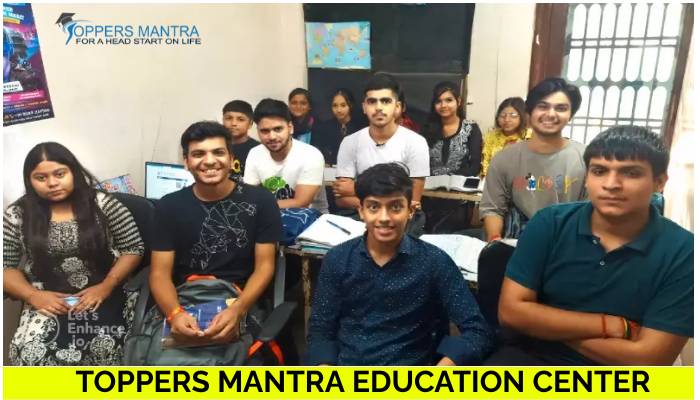
At our coaching center in Govind Puri Kalkaji, South Delhi, we provide:
- Structured coaching classes for NIOS Class 10 and 12 across all subjects
- Regular doubt-clearing sessions so you never feel stuck
- TMA guidance and submission support
- Exam preparation with previous year papers and mock tests
- Subject selection counselling so you choose the right combination from the start
- Online classes for students outside Delhi
- Free counselling for new students who are unsure whether NIOS or any other board suits their situation
📞 Call us: +91-9958010068 / +91-9958022889 📧 Email: info@toppersmantra.com 📍 Address: 1153/11, 2nd Floor, Govind Puri Kalkaji, South Delhi – 110019
Conclusion
The simple answer is no, NIOS is not harder than CBSE in terms of syllabus and paper difficulty. CBSE covers more ground, goes deeper into theory, and demands stronger preparation for competitive exams.
But NIOS has a challenge of its own: the need for self-discipline and consistent independent study. Students who walk into NIOS expecting it to be easy without any effort do not do well. Students who take it seriously, study the material, and submit their TMA on time perform very well.
Choosing between NIOS and CBSE should not be about which board is easier. It should be about which board fits your current situation, your goals, and your learning style.
If you are unsure which is right for you, Toppers Mantra is here to help you figure that out at no cost.